

PUBLISHED January 21, 2026
According to Statistics Canada’s “Canadian Economic News, December 2025” release, in December 2025, Canada’s economic landscape showed a mix of strategic investments, policy adjustments, and sector shifts. Major companies across energy and resources outlined significant capital spending for 2026, pointing to confidence in long-term prospects. Meanwhile, closures in other industries underscored ongoing challenges in certain segments. Public finances revealed structural deficits in multiple provinces, even as regional growth prospects varied. Ottawa moved to cushion manufacturers through tariff adjustments and targeted relief measures. The Bank of Canada opted to keep its interest rate unchanged into year-end. Labour tensions emerged with essential service unions signaling strike intentions. These developments framed a complex economic backdrop for end-of-year performance.
Beyond domestic developments, international central banks made varied moves on interest rates, with some easing and others holding steady. Oil prices saw slight downward movement through December, while the Canadian dollar strengthened modestly against its U.S. counterpart. Corporate transactions continued apace, including major acquisitions and portfolio reorganizations by banks and industrial firms. Foreign investment announcements highlighted Canada’s ongoing appeal for global technology and infrastructure capital. Labour trends suggested evolving conditions in some pockets of the employment market. Meanwhile, provincial budget forecasts underscored persistent fiscal imbalances. December’s economic narrative was therefore one of cautious optimism shaped by shifting global and local forces.
December saw major Canadian companies unveil their investment priorities for the coming year. Energy sector leaders in Calgary — including Suncor, Cenovus, and Imperial Oil — outlined capital expenditures totaling tens of billions of dollars for 2026, channelled into production expansion, infrastructure projects, and digital upgrades. Enbridge detailed growth capital plans nearing $10 billion. Meanwhile, resource partnerships such as a potential Sudbury copper project moved forward, indicating collaboration on future mining developments. On the other hand, Domtar’s decision to permanently shutter a British Columbia pulp facility highlighted ongoing restructuring pressures in legacy sectors, with significant job impacts. These investment signals reflect optimism in core industries even amid sectoral shifts.
December saw major Canadian companies unveil their investment priorities for the coming year. Energy sector leaders in Calgary — including Suncor, Cenovus, and Imperial Oil — outlined capital expenditures totaling tens of billions of dollars for 2026, channelled into production expansion, infrastructure projects, and digital upgrades. Enbridge detailed growth capital plans nearing $10 billion. Meanwhile, resource partnerships such as a potential Sudbury copper project moved forward, indicating collaboration on future mining developments. On the other hand, Domtar’s decision to permanently shutter a British Columbia pulp facility highlighted ongoing restructuring pressures in legacy sectors, with significant job impacts. These investment signals reflect optimism in core industries even amid sectoral shifts.
The Government of Canada implemented policy changes aimed at providing clarity and relief to manufacturers, expanding tariff relief measures against imported steel products. Multiple provinces released fiscal reports projecting deficits for 2025–26 — Manitoba and Nova Scotia in the billion-dollar range, and Newfoundland and Labrador with its own shortfall — alongside varying GDP growth forecasts. This mosaic of provincial finances suggests uneven economic momentum across regions. At the national monetary level, the Bank of Canada held the overnight interest rate at 2.25%, maintaining stability after a prior cut in October. Labor dynamics also made headlines as Quebec’s ambulance workers signaled intentions to strike, prompting government assurances of continuing essential services.
December’s economic context was not defined solely by domestic happenings. Key global central banks — including the U.S. Federal Reserve, the Reserve Bank of Australia, and the Bank of England — engaged in varied interest rate decisions, influencing international financial conditions. In commodities markets, West Texas Intermediate crude oil prices edged slightly lower, while Western Canadian Select crude traded in a broad range. The Canadian dollar closed the year stronger against the U.S. dollar, and the S&P/TSX composite index registered modest gains. High-profile corporate moves included major acquisitions and strategic investments, such as a significant digital infrastructure investment by a leading U.S. tech company. These developments underscored the interconnected nature of Canada’s financial landscape with broader global trends.
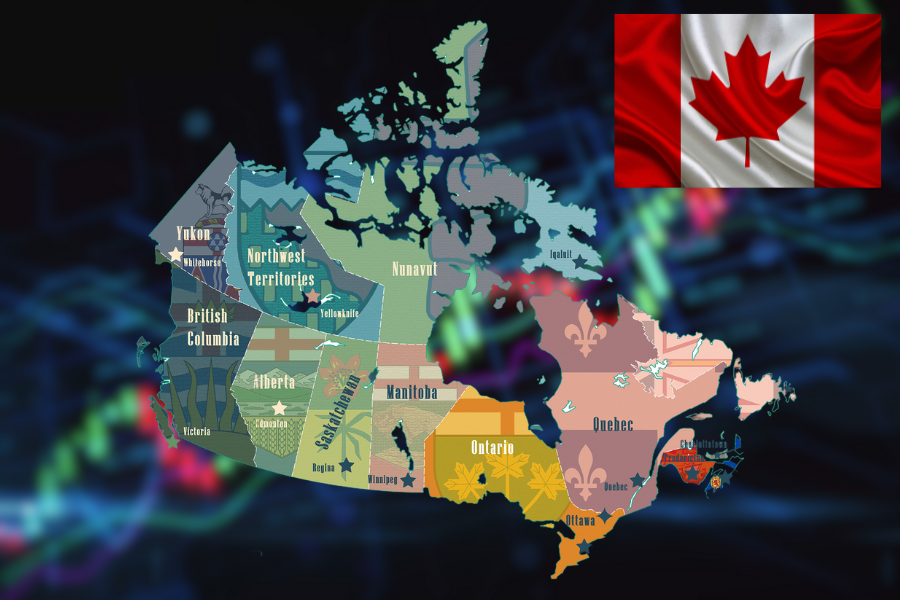
December 2025 painted a nuanced portrait of Canada’s economic momentum. Strong capital investment commitments from energy and resources firms signaled confidence in the nation’s core economic drivers for 2026. Government fiscal challenges persisted across several provinces, while federal policy steps aimed to support domestic manufacturing competitiveness. The central bank’s steady monetary stance indicated measured support amid inflation and growth considerations. Labour and market developments added further texture to the economic narrative as the year closed. Coupled with influential international monetary and investment trends, December’s economic news underscored a balance of opportunity and caution — setting the stage for Canada’s economic trajectory in the coming year.
The Government of Canada implemented policy changes aimed at providing clarity and relief to manufacturers, expanding tariff relief measures against imported steel products. Multiple provinces released fiscal reports projecting deficits for 2025–26 — Manitoba and Nova Scotia in the billion-dollar range, and Newfoundland and Labrador with its own shortfall — alongside varying GDP growth forecasts. This mosaic of provincial finances suggests uneven economic momentum across regions. At the national monetary level, the Bank of Canada held the overnight interest rate at 2.25%, maintaining stability after a prior cut in October. Labor dynamics also made headlines as Quebec’s ambulance workers signaled intentions to strike, prompting government assurances of continuing essential services.
December’s economic context was not defined solely by domestic happenings. Key global central banks — including the U.S. Federal Reserve, the Reserve Bank of Australia, and the Bank of England — engaged in varied interest rate decisions, influencing international financial conditions. In commodities markets, West Texas Intermediate crude oil prices edged slightly lower, while Western Canadian Select crude traded in a broad range. The Canadian dollar closed the year stronger against the U.S. dollar, and the S&P/TSX composite index registered modest gains. High-profile corporate moves included major acquisitions and strategic investments, such as a significant digital infrastructure investment by a leading U.S. tech company. These developments underscored the interconnected nature of Canada’s financial landscape with broader global trends.
December 2025 painted a nuanced portrait of Canada’s economic momentum. Strong capital investment commitments from energy and resources firms signaled confidence in the nation’s core economic drivers for 2026. Government fiscal challenges persisted across several provinces, while federal policy steps aimed to support domestic manufacturing competitiveness. The central bank’s steady monetary stance indicated measured support amid inflation and growth considerations. Labour and market developments added further texture to the economic narrative as the year closed. Coupled with influential international monetary and investment trends, December’s economic news underscored a balance of opportunity and caution — setting the stage for Canada’s economic trajectory in the coming year.

Reform PRODUCTS & SERVICES Group
Szentendrei út 87.
1033 Budapest
Hungary